
When Can Children Play Alone?
Most toddlers manage 2–5 minutes of solo play by 18–24 months. By age 4–5, many handle 30–45 minutes—with a safe space, familiar toys, and gradual practice.
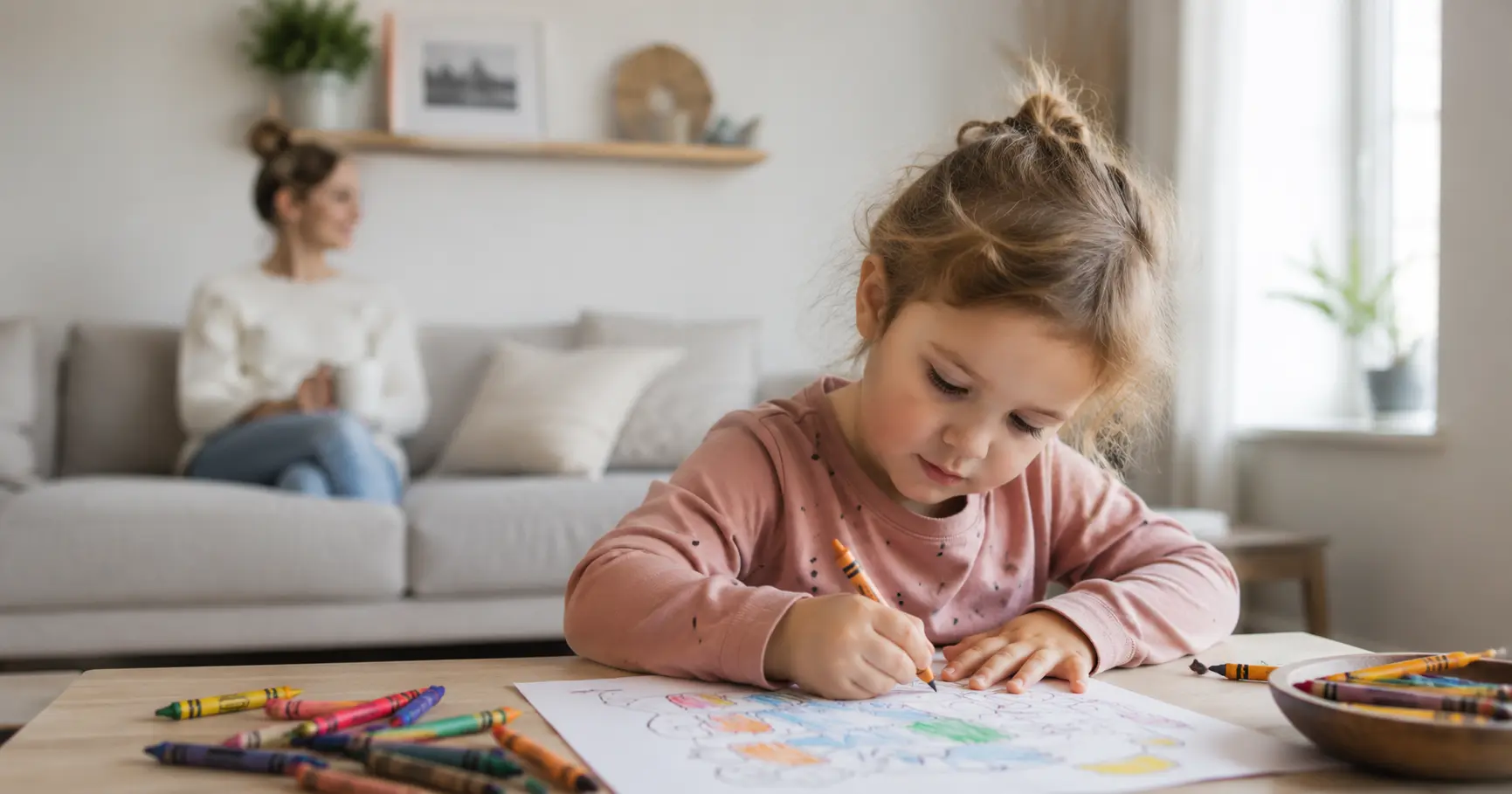
Most children can manage very short stretches of independent play surprisingly early—around 18–24 months, often just two to five minutes with you nearby. By age four or five, many handle thirty to forty-five minutes in a safe, familiar space. The distance between those two numbers is the real story: independent play is a skill that builds gradually, not a switch you flip on a birthday.
What “playing alone” actually means at each age
- 12–18 months: one to three minutes, with you in the same room and visible.
- 2–3 years: five to fifteen minutes; may call out to check you are still there.
- 3–4 years: fifteen to thirty minutes; can return to an unfinished activity.
- 4–5 years: thirty to forty-five minutes or more in a child-safe space.
- 6 and up: longer stretches possible, though check-ins still help—especially with new environments.
These are typical ranges, not deadlines. A three-year-old who manages ten minutes today is doing well. Compare your child to their own progress last month, not to a neighbor’s.
Signs your child is ready for longer stretches
- They stay with one activity instead of hopping every thirty seconds.
- They return to unfinished play (“I wasn’t done with my tower”).
- They tolerate brief separation without immediate distress.
- They can occupy themselves when you step into the next room for a minute.
- They ask for help less often when the setup is familiar and safe.
How to build the habit gradually
Start with you in the room but not directing—“I’ll sit here and read while you build.” Then step to the doorway, then the next room for two minutes, then five. Use the same time of day and the same safe zone so the routine becomes predictable. Celebrate when they re-engage on their own after a check-in; that is the skill growing.
Set up the space so you don’t have to hover
Independent play needs a child-safe environment and limited choices. Too many options overwhelm; three or four activities visible at once is enough. For under-threes, remove choking hazards and secure furniture. A low table with paper and crayons, a basket of blocks, and a few figures beats a room full of half-open toy bins.
Activities that hold attention longest
Open-ended materials win over single-purpose toys that do one thing and finish. Blocks, dolls, drawing supplies, sensory bins, and simple pretend props keep children inventing rather than consuming. Rotating one “special” activity each week—a new coloring page they helped create, a fresh puzzle, a box of loose parts—refreshes solo play without buying more plastic.
Independent play is not abandonment—it’s practice trusting the world is still there when you step back.
Hold the ranges loosely: a few minutes around eighteen months, half an hour or more by four or five, with practice and a safe space in between. Start small, keep the routine predictable, and watch for the moment your child drifts back to their play after a check-in. That quiet return—not the clock on the wall—is the milestone worth celebrating.