
The Real Benefits of Coloring for Kids (and What’s a Bit Overhyped)
Coloring gets sold as everything from a brain booster to a stress cure. Some of that holds up, some of it is wishful thinking — and “it keeps them happily busy” is a perfectly good reason on its own.
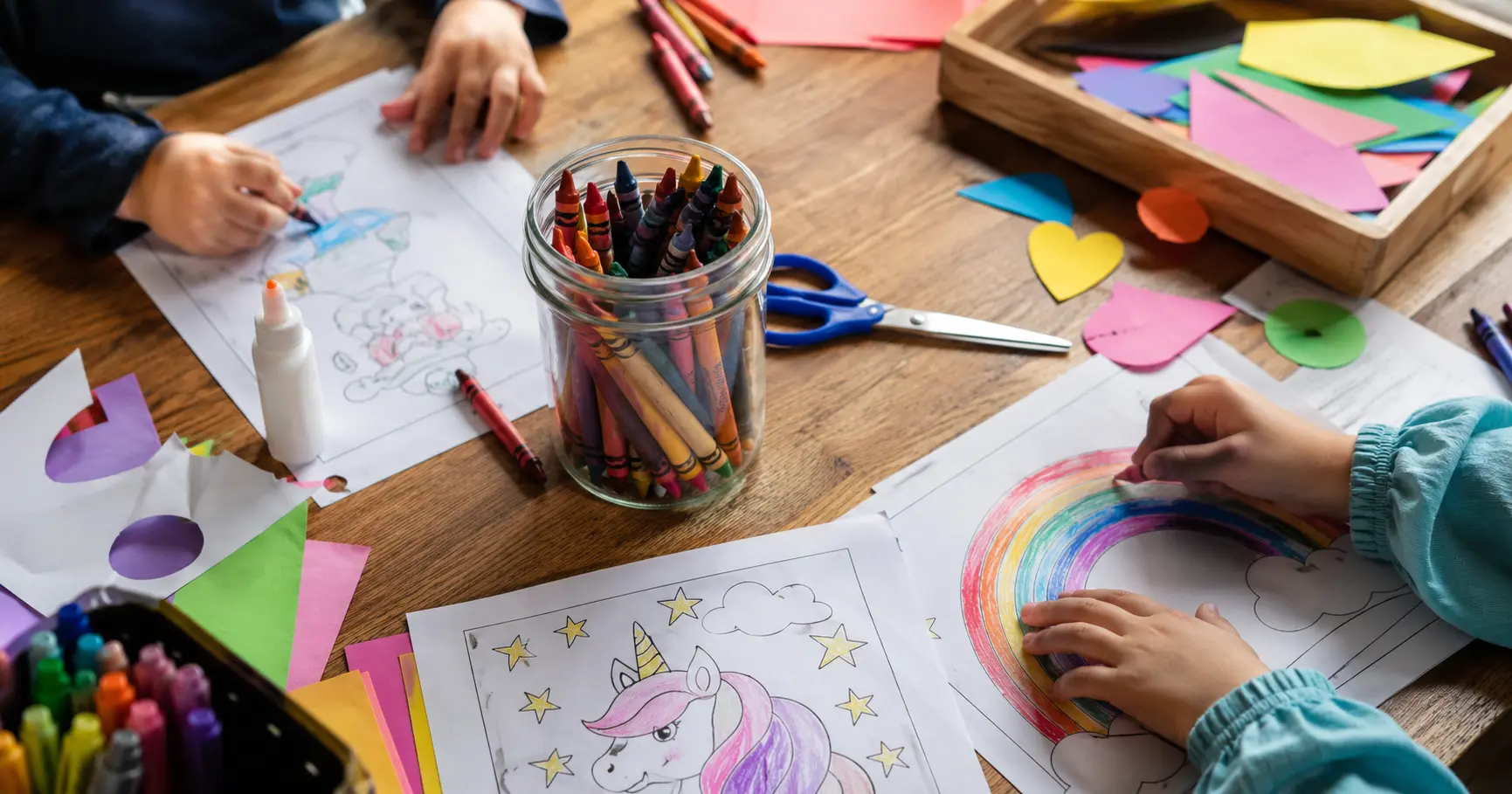
Search around long enough and you’ll find people claiming that coloring will sharpen your child’s focus, melt away their anxiety, fix their handwriting, and possibly improve their math. Some of that is real. Some of it is the kind of thing that gets repeated until it sounds official. It’s worth pulling the two apart, because coloring is genuinely good for kids — just not for every reason the internet insists.
What coloring actually does well
The clearest benefit is also the least glamorous: coloring builds the small hand muscles and grip control kids need for writing. Holding a crayon, staying roughly inside a line, pressing harder for dark and lighter for soft — that’s fine motor practice, done for fun instead of drilled as a worksheet.
- Fine motor skills: grip, pressure control, and the steady hand movements that later make letters easier.
- Hand-eye coordination: lining the crayon up with the spot you’re actually aiming for.
- Focus and patience: sticking with one thing long enough to finish it, which is a muscle of its own.
- Low-stakes decisions: choosing what color goes where is a small, harmless string of choices.
The calming effect is real, with a catch
Plenty of parents notice that coloring settles a wound-up kid, and there’s something to it. Repetitive, low-pressure activity gives a busy brain somewhere quiet to land. But it doesn’t work on command. A child already mid-meltdown won’t be soothed by a coloring book shoved into their hands — the calm comes when they choose to sink into it, not when it’s deployed as an emergency fix.
What tends to get oversold
The claim that coloring makes kids smarter, or directly boosts academic skills, is where it gets shaky. Coloring supports the physical and attention skills that help with school, but it’s not a shortcut to reading or math. And the popular idea that staying inside the lines teaches discipline rather misses the point — for younger kids, scribbling well outside the lines is completely normal and totally fine. Precision is not the goal at three.
How to get more out of it
- Let them choose the page. A kid who picked the dinosaur is more invested than one handed a worksheet.
- Stop praising neatness. “You used so many colors on the wings” beats “you stayed in the lines so well.”
- Keep it open-ended. Suggest adding a background, a sky, a story for whatever is happening on the page.
- Make some pages personal — one built from their own drawing or a family photo holds attention far longer than a random printable.
So is coloring “good” for kids?
Yes — for honest, ordinary reasons. It strengthens little hands, builds focus, gives a restless afternoon some shape, and lets kids make something they’re proud of. You don’t need to believe it raises IQ to justify the crayons. “It’s calm, screen-free, and they love it” is a complete answer all by itself.